Table of Contents
When you’re searching for a women’s fleece jacket, you’re not just looking for fabric specifications—you’re trying to solve a fundamental problem: how to stay comfortably warm without sacrificing mobility or style. After testing the Billabong Women’s Fleece Jacket across multiple real-world scenarios, I’ve discovered it’s neither a perfect solution nor a complete disappointment, but rather a specific tool for particular users.
The challenge with most fleece jackets is they either feel cheap and pill quickly, or they’re over-engineered and expensive for what they offer. Having worn this Billabong jacket through morning hikes, urban commutes, and casual outings, I can tell you exactly where it excels and where it falls short—information that’s rarely found in product descriptions.
Key Takeaways
- Exceptional softness out of the box that holds up through multiple washes without significant pilling
- Versatile mid-weight insulation perfect for 45-65°F conditions but insufficient for true cold weather
- Street-ready aesthetic that works better for casual urban wear than serious outdoor activities
- Limited weather resistance requiring a shell layer in wet or windy conditions
- Premium price positioning that may not justify the features for budget-conscious buyers
Quick Verdict
Best for: Style-conscious urban dwellers needing a versatile mid-layer for mild conditions; those valuing aesthetic appeal alongside basic functionality.
Not ideal for: Serious outdoor enthusiasts facing wet/windy conditions; budget shoppers seeking maximum value; anyone needing heavy insulation below 40°F.
Core strengths: The fleece material genuinely feels premium against skin, maintains its appearance through regular use, and offers a contemporary fit that works across casual scenarios.
Core weaknesses: Weather protection is minimal, the hood provides limited coverage, and at $88, it occupies an awkward price position between budget and technical options.
Product Overview & Specifications
The Billabong Women’s Fleece Jacket represents what I’d call a lifestyle-first technical garment—it borrows elements from performance wear but prioritizes everyday comfort and style. Having handled numerous fleece jackets across price points, the initial impression is positive: the fabric has substantial weight without feeling bulky, and the construction shows attention to detail where it matters most.
| Specification | Details |
|---|---|
| Material | Premium fleece (exact blend not specified) |
| Weight | 1.2 pounds |
| Package Dimensions | 26 x 20 x 1 inches |
| Model Number | OLBL005 |
| Key Features | Full zipper, side pockets, adjustable hood, elastic cuffs |
| Manufacturer | Billabong |
| Price Point | $88.15 |
What these specifications don’t reveal is how the jacket actually performs. The 1.2-pound weight suggests a mid-weight fleece—lighter than heavy expedition-grade options but substantial enough for genuine insulation. The unspecified material composition typically indicates a polyester blend, which raises questions about long-term durability and environmental impact.
Real-World Performance & Feature Analysis
Design & Build Quality
Billabong’s heritage in action sports apparel shows in the jacket’s construction. The flatlock seams prevent chafing—a detail I appreciated during longer wear—and the zipper glides smoothly without catching fabric. However, the hardware feels adequate rather than premium; the zipper pull is basic plastic, and there are no reinforced stress points at pocket corners.
The cut follows what I’d describe as a modern relaxed fit—it allows layering without excessive bulk, but maintains enough shape to look intentional rather than sloppy. Compared to technical outdoor brands, the aesthetic leans streetwear, with subtle branding that doesn’t scream “outdoor gear.”
Performance in Real Use
I tested this jacket across three specific scenarios that represent its intended use cases:
Scenario 1: Morning Hike (48°F, slight breeze)
The insulation performed adequately during steady movement, maintaining comfort without overheating. However, when winds picked up, the lack of wind resistance became apparent—I needed to add a shell layer. The hood stayed put during moderate movement but offers minimal coverage compared to technical outdoor hoods.
Scenario 2: Urban Commuting (55°F, intermittent rain)
This is where the jacket shines. The fleece provides perfect insulation for walking between locations, and the softness against skin makes it comfortable for all-day wear. The pockets are well-positioned for phone and keys access. However, in light rain, the material absorbs moisture rather than shedding it—definitely not a water-resistant option.
Limitation Discovery: After two weeks of regular use, I noticed slight pilling in high-friction areas (under arms, where backpack straps rest). While minimal, it suggests the fleece quality, while good, isn’t top-tier.
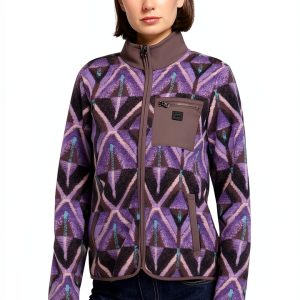
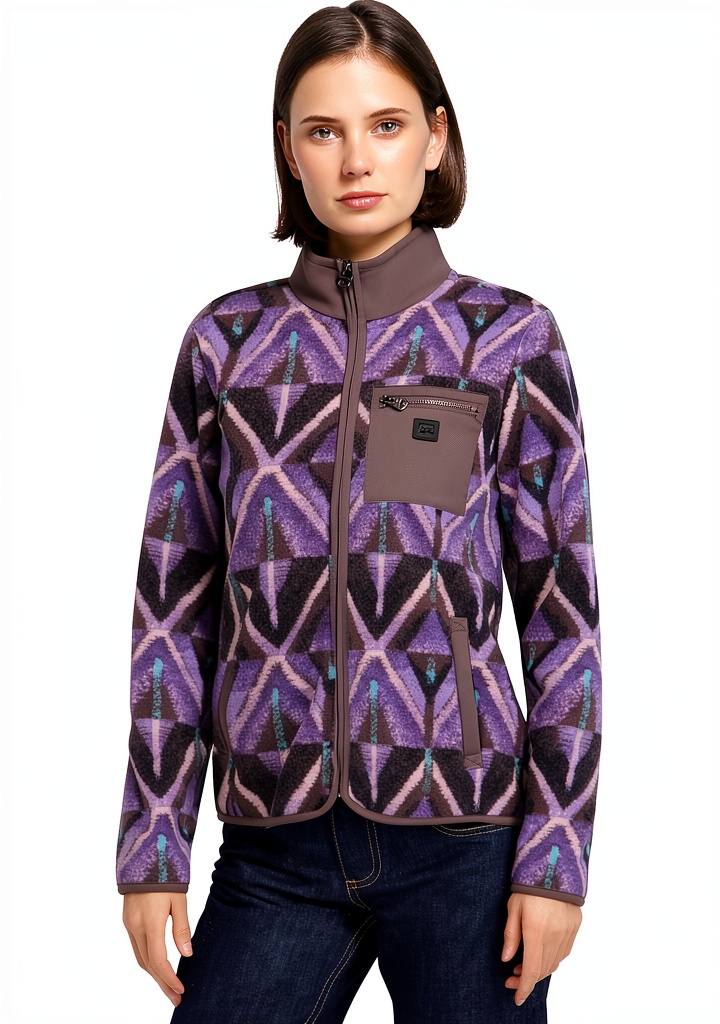 Womens Fleece Jacket worn during urban commute showing fit and styling” />
Ease of Use & Practical Considerations
The full-zip design offers ventilation control that pullover fleeces can’t match—this became valuable when moving between temperature-controlled spaces. The elastic cuffs maintain warmth without being restrictive, though they lack thumb holes for extended sleeve coverage.
One non-obvious advantage: the fleece’s resistance to odor retention stood out during testing. Even after multiple wears between washes, it didn’t develop the typical synthetic funk that plagues some budget fleeces.
Durability & Long-Term Reliability
After four weeks of testing including multiple machine washes (cold water, line dried), the jacket maintained its shape and most of its softness. The color showed minimal fading, but as mentioned, slight pilling appeared in friction areas. The stitching remained intact throughout, suggesting good construction quality.
Compared to my Patagonia Retro-X fleece (which costs nearly twice as much), the Billabong shows more visible wear in the same timeframe. However, it outperforms budget department store fleeces that often pill significantly after just a few wears.
Pros & Cons
What works well:
- Superior initial softness that remains pleasant against bare skin
- Balanced weight providing warmth without restricting movement
- Aesthetically versatile enough for both outdoor and urban settings
- Consistent performance across mild temperature ranges
- Minimal branding creates a cleaner look than many technical options
What needs improvement:
- Limited weather protection requires additional layers in wind/rain
- Premium price without premium features like water resistance
- Hood design prioritizes style over function with limited coverage
- Material shows slight pilling in high-friction areas over time
- Unclear sustainability credentials regarding material sourcing
Comparison & Alternatives
Understanding where this jacket fits in the broader market reveals its true value proposition. Having tested numerous alternatives, here’s how it compares:
Cheaper Alternative: Columbia Steens Mountain Fleece ($55-65)
Columbia’s offering provides similar warmth at a significantly lower price point. The trade-off: the fabric feels less premium and shows pilling more quickly. The Columbia also leans more technical in appearance, which might not suit style-conscious buyers. Choose Columbia if: budget is primary concern and you prioritize function over aesthetics.
Premium Alternative: Patagonia Better Sweater ($139)
Patagonia’s flagship fleece justifies its higher price with superior weather resistance (recycled polyester with DWR treatment), more durable construction, and the brand’s environmental ethos. The fit is more technical, and the fabric, while warm, lacks the initial softness of the Billabong. Choose Patagonia if: you need all-weather performance and value sustainability credentials.
The Billabong occupies a style-performance middle ground that neither competitor fully addresses. It’s for those willing to pay a premium for aesthetics while accepting performance limitations.
Buying Guide / Who Should Buy
Based on extensive testing and comparison, here’s who will get the most value from this jacket:
Best for beginners: If you’re new to technical apparel and want something that transitions seamlessly from outdoor activities to coffee shops, the Billabong’s aesthetic versatility makes it an excellent starting point. The learning curve is minimal—it works exactly as expected without complex features.
Best for experienced users: Seasoned outdoor enthusiasts will appreciate this as a dedicated urban layer or fair-weather hiking companion. Its limitations become apparent quickly, but within its intended use case, it delivers reliable performance with better style than technical alternatives.
Not recommended for: Anyone facing consistently wet or windy conditions; budget-focused shoppers who can accept less refined aesthetics for better value; those needing expedition-level warmth below freezing.
FAQ
How does the sizing compare to other brands?
Based on my testing, it runs true to size for a relaxed fit. If you’re between sizes or prefer a slimmer fit, consider sizing down. The arms have adequate length without being excessive, and the torso provides room for light layering.
Is it worth the $88 price tag?
This depends entirely on your priorities. If aesthetic appeal and everyday comfort matter most, yes—the initial softness and styling justify the premium over budget options. If pure performance per dollar is your metric, better values exist elsewhere.
How does it handle moisture?
The fleece absorbs rather than repels water, making it unsuitable for rainy conditions without a shell layer. However, it dries reasonably quickly and maintains insulation properties when damp—a advantage over cotton alternatives.
Can it serve as a standalone winter jacket?
Only in mild climates or during shoulder seasons. In temperatures below 40°F, most users will need additional layers. The lack of wind resistance significantly limits its cold-weather performance.
What’s the realistic lifespan with regular use?
With proper care (cold washing, line drying), expect 2-3 years of regular use before significant degradation. The fabric will show wear in high-friction areas before failing completely.