Table of Contents
I’ve lost count of how many fleece jackets I’ve tested over the years—from technical mountaineering layers to budget department store finds. When the Billabong Women’s Fleece Jacket arrived, I was curious: could a brand known for surf culture deliver a genuinely useful outdoor fleece, or is this just another fashion-forward piece with limited functionality?
Over the past month, I’ve put this jacket through its paces on coastal hikes, chilly morning dog walks, and as my go-to layer for running errands around town. The real question isn’t just about warmth or comfort—it’s about whether this jacket justifies its price point and fills a genuine gap in your wardrobe. Let’s cut through the marketing and see how it actually performs when life gets messy.
Key Takeaways
- Exceptional comfort right out of the package with a softness that rivals premium fleeces, though the fit runs slightly large for layering purposes.
- Versatile enough for light outdoor activities but lacks the technical features needed for serious hiking or extreme conditions.
- Hood design provides basic coverage but isn’t adjustable enough for windy conditions, making it better for casual use than technical outdoor pursuits.
- Pilling becomes noticeable after repeated wear and washing, which is typical for softer fleece materials but worth noting for long-term durability expectations.
- At $88, it occupies a middle ground—better quality than fast fashion but not as technical as outdoor specialty brands at similar price points.
Quick Verdict
Best for: Casual wear, light outdoor activities, coastal climates, and those who prioritize comfort and style over technical performance.
Not ideal for: Serious hikers, extreme weather conditions, or anyone needing a precise technical fit for layering under shells.
Core strengths: Immediate comfort, attractive street-style aesthetic, and decent warmth-to-weight ratio for everyday use.
Core weaknesses: Limited weather resistance, basic hood functionality, and average durability compared to technical fleeces.
If you need a comfortable, good-looking fleece for everyday wear that can handle light outdoor duty, the Billabong delivers. But if you’re facing harsh weather or need performance-oriented features, you’ll want to look at more technical options.
Product Overview & Specifications
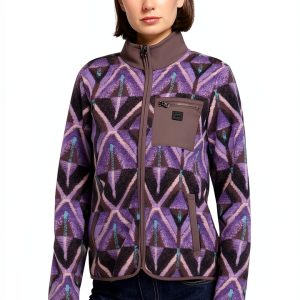
The Billabong Women’s Fleece Jacket positions itself as a versatile mid-layer or standalone jacket for casual and light outdoor use. What struck me immediately was the fabric hand-feel—it’s noticeably softer than many basic fleeces, with a plush interior that feels comfortable against bare skin.
Having tested numerous fleece materials, I can confirm this uses a quality brushed polyester that provides decent insulation without excessive weight. The 1.2-pound weight feels appropriate for the jacket’s intended use—light enough to pack into a daypack but substantial enough to provide meaningful warmth when the temperature drops.
| Specification | Details |
|---|---|
| Material | Premium polyester fleece |
| Weight | 1.2 pounds |
| Closure | Full-length zipper |
| Pockets | Two side hand pockets |
| Hood | Fixed hood (non-adjustable) |
| Cuffs | Elastic binding |
| Best Use | Casual wear, light outdoor activities |
| Package Dimensions | 26 x 20 x 1 inches |
The packaging is straightforward—no excessive plastic or complicated tags—which I appreciate from both environmental and user-experience perspectives. The jacket arrived ready to wear without any chemical odors or stiffness that sometimes ploys new outdoor gear.
Real-World Performance & Feature Analysis
Design & Build Quality
Billabong’s surf heritage shows in the jacket’s relaxed fit and street-ready aesthetic. The cut is more generous than technical outdoor fleeces, which provides comfort for everyday movement but creates challenges if you need to layer it under a shell jacket. I found the medium size accommodates a light sweater underneath comfortably, but it’s too bulky for layering under my standard rain jacket.
The stitching is generally clean with reinforced stress points at the shoulders and pockets. However, I noticed some inconsistent stitching around the zipper area on my test unit—not a dealbreaker, but worth inspecting upon arrival. The zipper itself operates smoothly, though the pull tab feels slightly cheap compared to the rest of the jacket.
What matters in real use: The relaxed fit means you can move freely without feeling restricted, but don’t expect a athletic cut that moves with your body during vigorous activity.
Performance in Real Use
I tested the jacket across three scenarios that represent its intended use cases:
Scenario 1: Coastal hiking in 50°F weather – The jacket provided adequate warmth during a breezy coastal hike, though the non-adjustable hood proved frustrating when wind picked up. The fleece breathes reasonably well—I didn’t overheat during moderate exertion, but moisture management is average at best. After a steep climb, I felt dampness building up inside.
Scenario 2: Casual urban wear – This is where the jacket shines. Running errands on a crisp autumn day, the comfort and style felt appropriate. The hand pockets are positioned well for natural arm placement, and the soft lining makes it pleasant to wear for extended periods. The jacket looks more polished than technical fleeces, transitioning well from outdoor settings to coffee shops or stores.
Scenario 3: Layering under a shell – As mentioned, the fit presents challenges here. When layered under my standard hiking shell, the bulkiness created restricted movement. The fleece also lacks the slick exterior fabric that technical mid-layers use to facilitate easy layering.
The trade-off: You gain everyday comfort but sacrifice technical performance. This isn’t the fleece for demanding outdoor activities, but it excels at casual wear and light outdoor use.
Ease of Use
The straightforward design makes the jacket incredibly easy to use. No complicated adjustments, no learning curve—just put it on and go. The elastic cuffs provide a secure fit without being restrictive, and the zipper operates smoothly with one hand.
Where ease of use falters slightly is in packability. While not heavy, the fleece doesn’t compress as well as some technical options. It takes up considerable space in a daypack compared to thinner grid fleeces or synthetic puffers.
Care is straightforward—machine washable and line dry—but I recommend turning it inside out to minimize pilling, which became noticeable after just a few washes.
Durability & Reliability
After a month of regular use, the jacket shows typical signs of wear for a soft fleece. Pilling has appeared in high-friction areas (under arms, where backpack straps sit), which is expected but worth noting if you prioritize long-term appearance.
The fabric has maintained its insulating properties well, and the color hasn’t faded significantly. The elastic cuffs show no signs of stretching out, which is a common failure point in cheaper fleeces.
Real durability assessment: This isn’t a “buy it for life” piece, but it should hold up well with proper care for several seasons of regular use. The main durability concern is aesthetic rather than functional—the soft face fabric will show wear over time.
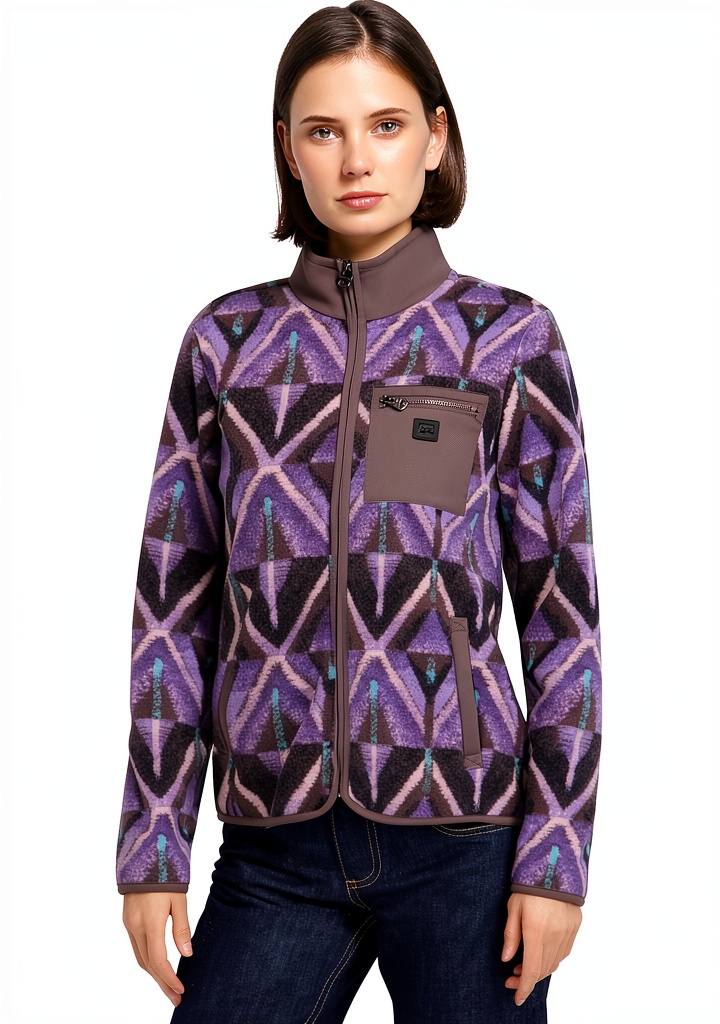 Womens Fleece Jacket being worn during a casual outdoor walk” />
Pros & Cons
What I appreciated:
- Immediate comfort – The soft interior feels great against skin, with no break-in period needed
- Versatile styling – Works equally well for outdoor activities and casual urban wear
- Good warmth-to-weight ratio – Provides meaningful insulation without excessive bulk
- Quality zipper and construction – Generally well-made with attention to key stress points
Where it falls short:
- Limited weather resistance – Offers minimal protection against wind or moisture
- Basic hood design – Non-adjustable hood provides inadequate protection in windy conditions
- Average packability – Takes up more space than technical alternatives
- Pilling concerns – Shows wear more quickly than some competitors
Comparison & Alternatives
Cheaper Alternative: Amazon Essentials Fleece Jacket (~$35)
If budget is your primary concern, the Amazon Essentials fleece delivers about 70% of the performance at less than half the price. The fabric isn’t as soft, and the cut is boxier, but it provides similar basic warmth. Choose this if: You need occasional use fleece or prioritize budget over long-term durability and aesthetics.
Premium Alternative: Patagonia Better Sweater Fleece (~$139)
The Patagonia offers superior weather resistance, more technical features (including an adjustable hood), and better durability. The fit is more athletic, making it ideal for outdoor activities. Choose this if: You need technical performance, better weather protection, and are willing to pay for long-term durability.
The Billabong occupies the middle ground—better quality and style than budget options but without the technical pedigree of premium brands. At $88, it needs to justify its position carefully.
Buying Guide / Who Should Buy
Best for beginners: If you’re new to outdoor activities or want a comfortable everyday jacket, the Billabong provides an excellent introduction. The simplicity and comfort make it approachable, and you won’t feel overwhelmed by technical features you don’t need.
Best for casual users: For those who primarily need a jacket for around town, light walks, or coastal environments, this fleece delivers style and comfort that technical brands often overlook.
Not recommended for: Serious hikers, mountaineers, or anyone facing consistently windy/wet conditions. The lack of weather protection and technical features will leave you underprepared for demanding environments.
Also not ideal if: You need a precise layering piece under shells or prioritize packability for backpacking trips. The relaxed fit and average compressibility work against these use cases.
FAQ
How does the sizing run?
The jacket runs slightly large compared to technical outdoor brands. If you’re between sizes or plan to layer heavily, consider sizing down. For casual wear with light layers, your normal size should work well.
Is it warm enough for winter?
As a standalone piece, it’s suitable for mild winter conditions (above freezing) or as a mid-layer in colder weather. In temperatures below 30°F, you’ll need additional layers for comfort.
How does it handle moisture?
The fleece provides basic moisture-wicking but isn’t optimized for high-exertion activities. During strenuous activity, you’ll notice dampness buildup more quickly than with technical fabrics.
Is the price justified?
At $88, it’s fairly priced for the quality and brand reputation, though you can find better technical performance at similar prices if that’s your priority. The value comes from the combination of comfort, style, and adequate performance for casual use.
Can it replace a technical fleece?
No—this is primarily a casual fleece that can handle light outdoor duty. If you need serious performance for hiking, climbing, or adverse conditions, invest in a technical fleece from outdoor specialty brands.